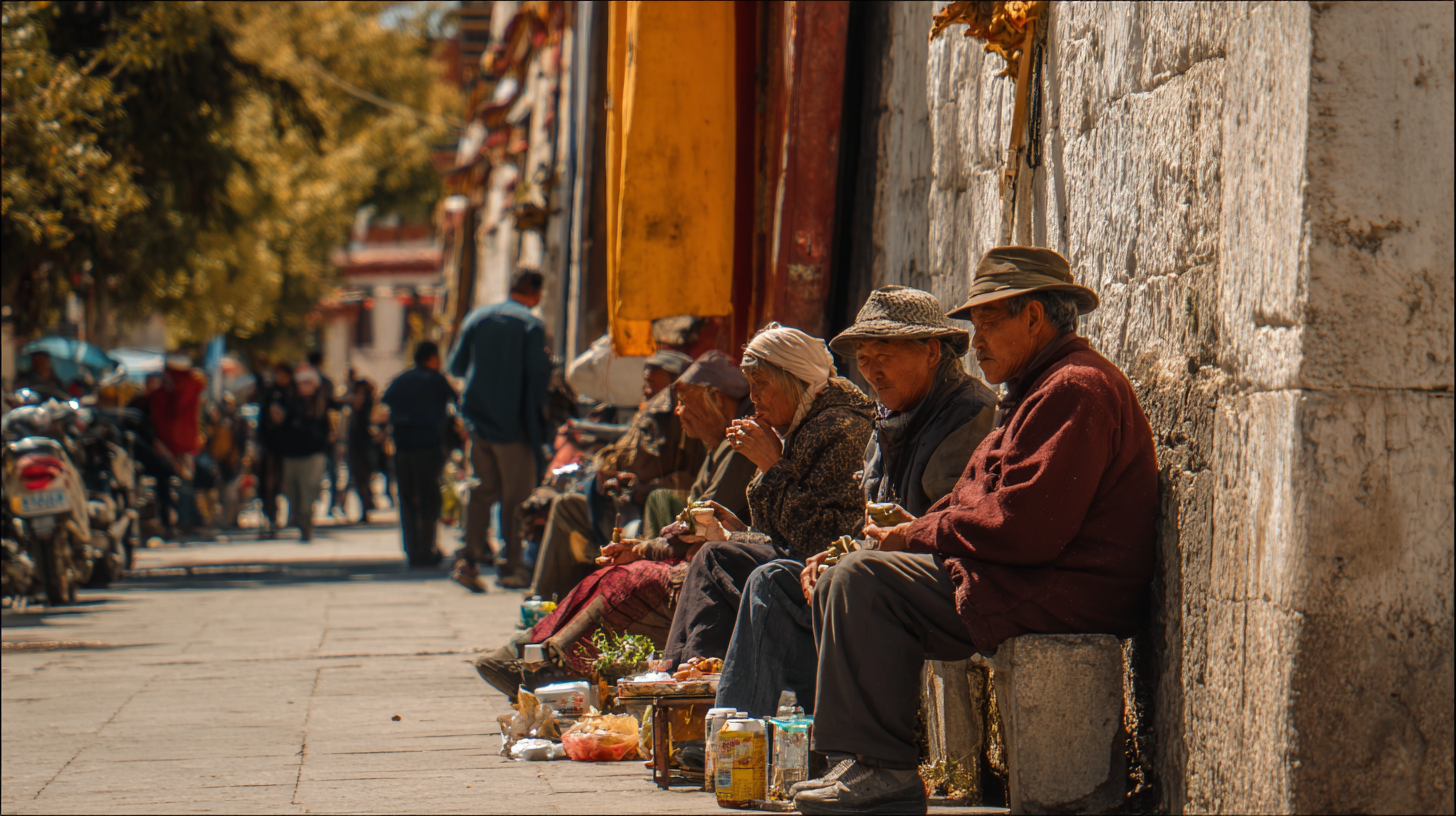
Travellers look for different things when they visit a place. Food is one of the most important things among that and the cuisine makes a place even more appealing. Tibetan cuisine is unique and the geography of the place and the neighbouring countries influence it greatly. From noodles and cheese to butter and soups, Tibetan food is absolutely wonderful.
Travellers will love the taste of the various dishes and there are some amazing restaurants, which offer good service and mouth-watering preparations. Various grains are used as Tibet’s staple food and barley is quite common.
Dairy products along with milk are almost indispensable and people consume them quite often. Tibet doesn’t produce rice in huge amounts, so it comes from imports; the southern region witnesses some rice cultivation, but it is not sufficient to feed the entire region.
How does the unique topography of Tibet influence its agriculture and lifestyle?
Tibet’s extreme altitude affects agriculture and food cultivation. While vegetables and fruits are difficult to grow at high elevations, locals have adapted their cuisine to available ingredients. During harsh winters, farming becomes limited.
Though different from other regional cuisines, Tibetan food remains nutritious and flavorful. Recent agricultural modernization, including greenhouses, has enabled growing more diverse crops like leafy greens and tomatoes at altitude.
Most crops are grown in lower-lying areas and river valleys rather than high regions. Barley thrives in harsh conditions and forms the basis of popular dishes like Tsampa, Sha Phaley, and Balep. For dinner, many enjoy Thukpa—a warming noodle soup with meat and vegetables. Our culinary traditions reflect careful attention to detail, from serving methods to our use of local materials like bamboo chopsticks.
Quick Overview
| Food Name | Feature Description |
|---|---|
| Tsampa | Roasted barley flour mixed with butter tea or other liquid; portable, high-energy |
| Sha Phaley | Pan-fried pastry filled with seasoned meat and cabbage; crispy outside, juicy inside |
| Balep | Thick flatbread made from barley flour; soft, slightly chewy, ideal for dipping |
| Thukpa | Hearty noodle soup with meat, vegetables, and aromatic broth; warming and nourishing |
| Yak Butter | Butter churned from yak milk; rich in fat, used for cooking, tea, and cultural rituals |
Best Tibetan Foods
Tsampa

Tsampa is Tibet’s staple item and this nutty-tasting foodstuff is prepared from delicious roasted barley. This item is extremely unique and almost exclusive to Tibet. The grain has deep roots in Tibetan culture, and the locals are often referred to as “tsampa-eaters.” A food item can represent the people of a place, and tsampa does exactly that here.
Main Ingredients: Roasted barley flour is the main ingredient, and sometimes a small proportion of wheat flour is used. Traditionally, the entire mixture is blended with Tibet’s butter tea, which is a bit salty in nature.
Making of Tsampa: Tibetans prefer foods that are very convenient to make. The preparation process is quite simple, so nomads and travellers can eat it on the go. Traditionally, butter tea is the main liquid, but nowadays beer—or even plain water—is sometimes used. To prepare, a bowl is greased with yak butter or butter tea at the very bottom.
A sufficient amount of tsampa flour is dropped on top, and then the mixture is stirred well until a dumpling-like paste forms. It’s then washed down with more tea or other liquid. To make it truly delicious, practice and dexterity are required, as the right proportions and stirring technique determine both texture and flavor.
Cultural Significance: Beyond its dietary role, tsampa carries religious importance. Some Buddhist rituals involve throwing tsampa as an offering to the gods. Over centuries, tsampa became intertwined with Tibetan culture, symbolizing joy and ecstatic celebration.
During Losar (Tibetan New Year), families and communities toss tsampa toward the sky to bring good luck and ward off negativity. At funerals, tsampa-throwing ceremonies help release the deceased’s soul; the act of scattering the roasted barley signifies impermanence and renewal.
Sha Phaley (Tibetan Meat Pie)

Sha Phaley is a beloved fried pastry filled with seasoned beef or mutton and cabbage, wrapped in a thin dough skin. In regions where wheat can be grown in lower-elevation valleys, Sha Phaley has become a staple street food and household favorite.
Main Ingredients: A simple dough made of wheat flour, water, and a pinch of salt. The filling consists of ground or finely chopped beef (or mutton), shredded cabbage, diced onions, garlic, ginger, and sometimes shredded carrots or spring onions. A blend of local spices—such as Sichuan pepper, cumin, and a hint of chili—adds warmth.
Making of Sha Phaley: The dough is rolled into circles, the filling spooned in, and edges crimped to seal. Sha Phaley are then pan-fried in yak butter or vegetable oil until the bottom is golden brown, before adding a splash of water and covering the pan to steam-cook the inside. The result: a crispy exterior with juicy, flavorful meat inside.
Cultural Significance: Sha Phaley often appears at family gatherings and festivals. In agricultural communities, families prepare large batches before winter, then freeze them for quick meals on frigid days. Locals carry them to the fields as portable sustenance.
When guests visit, offering Sha Phaley alongside tsampa demonstrates hospitality and culinary pride.
Balep

Balep is a round, flatbread made primarily from highland barley (tsampa flour), water, and a leavening agent (often baking soda or yeast). It resembles a thick pancake and serves as an ideal companion for soups or stews.
Main Ingredients: Tsampa flour, water, a little oil or butter, and sometimes a pinch of salt or a leavening agent. In some southern valleys, where wheat flour is more available, a mixture of barley and wheat flours is used.
Making of Balep: The dough is kneaded until smooth, then shaped into discs about 1–2 cm thick. It’s cooked on a flat griddle or in a heavy-bottomed pan with yak butter until both sides are lightly browned. The resulting bread is soft inside with a slightly chewy texture, perfect for dipping into stews or wrapping around pieces of meat.
Cultural Significance: Balep is often eaten for breakfast or lunch, paired with butter tea or soup. In homes across Tibetan villages, mothers teach children how to knead and cook Balep from a young age—it’s considered a rite of passage in regions where barley is a way of life.
Thukpa

Thukpa is a heartwarming noodle soup that can be found in nearly every Tibetan community. It combines hand-pulled or locally made wheat noodles with meat, vegetables, and aromatic broth—ideal for cold evenings at altitude.
Main Ingredients: Noodles (made from wheat flour), chunks of yak, beef, or mutton, leafy greens (such as spinach or local wild greens), carrots, onions, garlic, ginger, and a simple broth (often bone-based).
Making of Thukpa: First, a clear broth is prepared by simmering bones and meat for several hours, adding aromatics like ginger and garlic. Meanwhile, dough is rolled and cut into noodles. Vegetables are blanched briefly before being added to the broth, along with the meat.
Just before serving, noodles are added to the simmering soup and cooked until tender. A sprinkle of fresh coriander (cilantro) and a dollop of chili oil or chopped green chilies elevate the flavor.
Cultural Significance: Thukpa is not only a daily meal but also a communal dish served during festivals or gatherings. Farmers bring their families to share a pot of Thukpa after a day’s work in the fields.
Street vendors in Lhasa and Shigatse set up portable stoves to sell bowls of Thukpa to passersby. In winter, a steaming bowl of Thukpa provides both warmth and energy, embodying the Tibetan emphasis on hearty, practical nourishment.
Yak Butter

Yak Butter—made from the milk of female yaks—is a cornerstone of Tibetan cuisine and culture. It’s used as a cooking fat, spread on bread, and essential in beverages like butter tea.
Main Ingredients: Fresh yak’s milk, which has a higher butterfat content than cow’s milk. In summer months, when yaks graze high in alpine meadows, milk yields increase, allowing families to produce larger quantities of butter.
Making of Yak Butter: Milk is left to ferment overnight in cool conditions. The resulting thick yoghurt-like substance is then churned—traditionally by agitating the container inside a sheep’s stomach-turned-bag or by manual churning—to separate the butterfat from the buttermilk.
In winter, when yaks produce less milk, families may store yoghurt in animal skins and knead it until butter forms.
Cultural Significance: Yak Butter supplements tsampa, making a simple meal more satisfying. Beyond the table, yak butter is indispensable in religious and daily life: prayer wheels are lubricated with it to ensure smooth rotation, and butter lamps—used in monasteries and homes—burn yak butter as fuel, symbolizing the light of wisdom dispelling darkness.
During the Butter Lamp Festival (Chotrul Duchen), stunning sculptures and thangkas crafted from pure butter are displayed, drawing crowds from across the region. These intricate butter sculptures are not only religious offerings but also demonstrations of artisanship, often sold or exhibited during Losar celebrations.
Best Tibetan Drinks
Butter Tea (Po Cha)

Butter tea—known locally as Po Cha or Gur-Tsoq—is ubiquitous in Tibetan households, offering warmth, calories, and comfort against the cold.
Main Ingredients: Black tea leaves (often brick tea), yak butter, water, and rock salt. In some areas, local salt—harvested from ancient salt lakes—is preferred.
Making of Butter Tea: Tea leaves are simmered in water for several hours, producing a dark, strong brew. The leaves are then strained, and the resulting tea is poured into a churn (often a bamboo or wooden barrel).
Yak butter and salt are added, and the mixture is vigorously churned until it emulsifies into a creamy, frothy brew. The ratio of butter to tea varies by household—some prefer it extra rich, others lighter.
Cultural Significance: Butter tea is as much a social ritual as a beverage. Guests are welcomed with a cup, often served with a pinch of tsampa dough or a piece of Balep on the side. Families drink it at any time of day—morning, midday, and evening.
In high-altitude valleys, where cold winds can sap strength, a bowl of Po Cha quickly restores energy. Monks in monasteries begin their days with butter tea, and during long prayer sessions, devotees sip it to stay alert.
Chang (Barley Wine)

Chang is the traditional barley wine of Tibet. Though low in alcohol content (around 2–5 %), it is central to social life, religious ceremonies, and festivals.
Main Ingredients: Highland barley, millet, and sometimes rice grains; local yeast (often a wild strain). In some regions, wild flowers or herbs are added to impart unique aromas.
Making of Chang: Millet or barley grains are malted—partially sprouted—then piled into a container (often a wooden barrel or large earthen pot). Hot water is poured over, and the liquid is strained through a narrow bamboo tube called a pipsing. As the boiled grain water cools, yeast is introduced, and the mixture is left to ferment for 2–3 days.
After primary fermentation, more water is added to dilute and mellow the brew. Finally, it is allowed to sit longer—sometimes up to a month—in cool cellars or earthen pits, letting complex flavors develop.
Social and Cultural Usage: Chang is offered to guests as a gesture of respect and friendship. During Losar, weddings, and funerals, large jars of Chang are placed at communal tables.
In some areas, villagers resolve disputes by sharing a cup of Chang—symbolizing reconciliation. The Lhasa Brewing Company, founded in the mid-20th century, capitalized on Chang’s popularity by producing Lhasa Beer, a commercial adaptation that introduced Tibetan barley’s character to urban markets.
Tourists can now sample Chang in local pubs, where it’s often served warm in leather-wrapped bowls.
Tibetan Yoghurt (Dha Ptso)

Tibetan Yoghurt—known as Dha or Dha Ptso—is a thick, tangy fermented milk product made from yak milk or cow milk.
Main Ingredients: Yak milk (preferred for its richness) or a mixture of yak and cow milk; natural starter culture from previous batches.
Making of Tibetan Yoghurt: Fresh milk is boiled, then cooled to a lukewarm temperature before adding a spoonful of existing yoghurt as starter. The mixture is kept in a warm place (often wrapped in a woolen cloth) for 12–24 hours, allowing good bacteria to ferment the lactose into lactic acid. The result is an exceptionally creamy, sour yoghurt.
Cultural Significance: Tibetan Yoghurt plays a starring role during the Shoton Festival (Yoghurt Festival) in Lhasa. Monasteries display large thangkas, and families gather in open fields to feast on bowls of Dha Ptso, often sweetened with drops of local honey. In urban homes, yoghurt is eaten as breakfast, snack, or light dessert—sometimes topped with dried fruits, walnuts, or a drizzle of yak butter for extra richness. Its high probiotic content aids digestion at high altitudes, and it’s believed to balance the body’s humors according to traditional Tibetan medicine.
Tsampa Milk

Tsampa Milk is a simple, nourishing drink made by combining tsampa flour with boiled yak (or cow) milk.
Main Ingredients: Roasted barley flour (tsampa) and hot yak milk; sometimes a pinch of salt or sugar.
Making of Tsampa Milk: A ladleful of hot milk is poured over a small mound of tsampa flour and stirred vigorously until the mixture forms a loose porridge or smoothie-like consistency. More hot milk is added until the desired thickness is reached. Some families add a spoon of yak butter for creaminess.
Cultural Significance: Tsampa Milk is popular at breakfasts, especially before long treks or farm work. In villages, mothers prepare Tsampa Milk for children to ensure they start the day with energy. During ritual gatherings, a communal pot of Tsampa Milk may be set out, symbolizing sharing and unity.
Yak Butter Latte (Modern Twist)

In recent years, urban cafes in Lhasa, Shigatse, and other cultural hubs have introduced a modern interpretation of butter tea: the Yak Butter Latte.
Main Ingredients: Espresso shot, butter tea, steamed milk, and a small amount of yak butter or cream.
Making of Yak Butter Latte: A shot of espresso is brewed and poured into a cup. In a separate churn, butter tea is prepared as usual. Steamed milk is then added to the butter tea, producing a creamy base. Finally, the espresso is gently poured over the tea-milk mixture, creating layers. Some cafes top it with a sprinkle of roasted barley flour or a pinch of Tibetan saffron for visual appeal.
Cultural Significance: Though not traditional, the Yak Butter Latte reflects the fusion of Tibetan heritage and contemporary café culture. It’s popular among younger locals and tourists alike, offering a caffeinated alternative to classic butter tea.
Final: A Journey of Taste from Traditional to Modern
Tibetans are greatly enthusiastic about food and drink, and they love experimenting with new variations.
Whether you visit a remote nomad’s tent or a bustling Lhasa teahouse, these dishes and beverages offer a window into a culture shaped by high-altitude life, Buddhist traditions, and a deep respect for the land.
Experience these flavors on your journey across the Tibetan plateau, and you’ll understand why they remain beloved by locals and travellers alike.