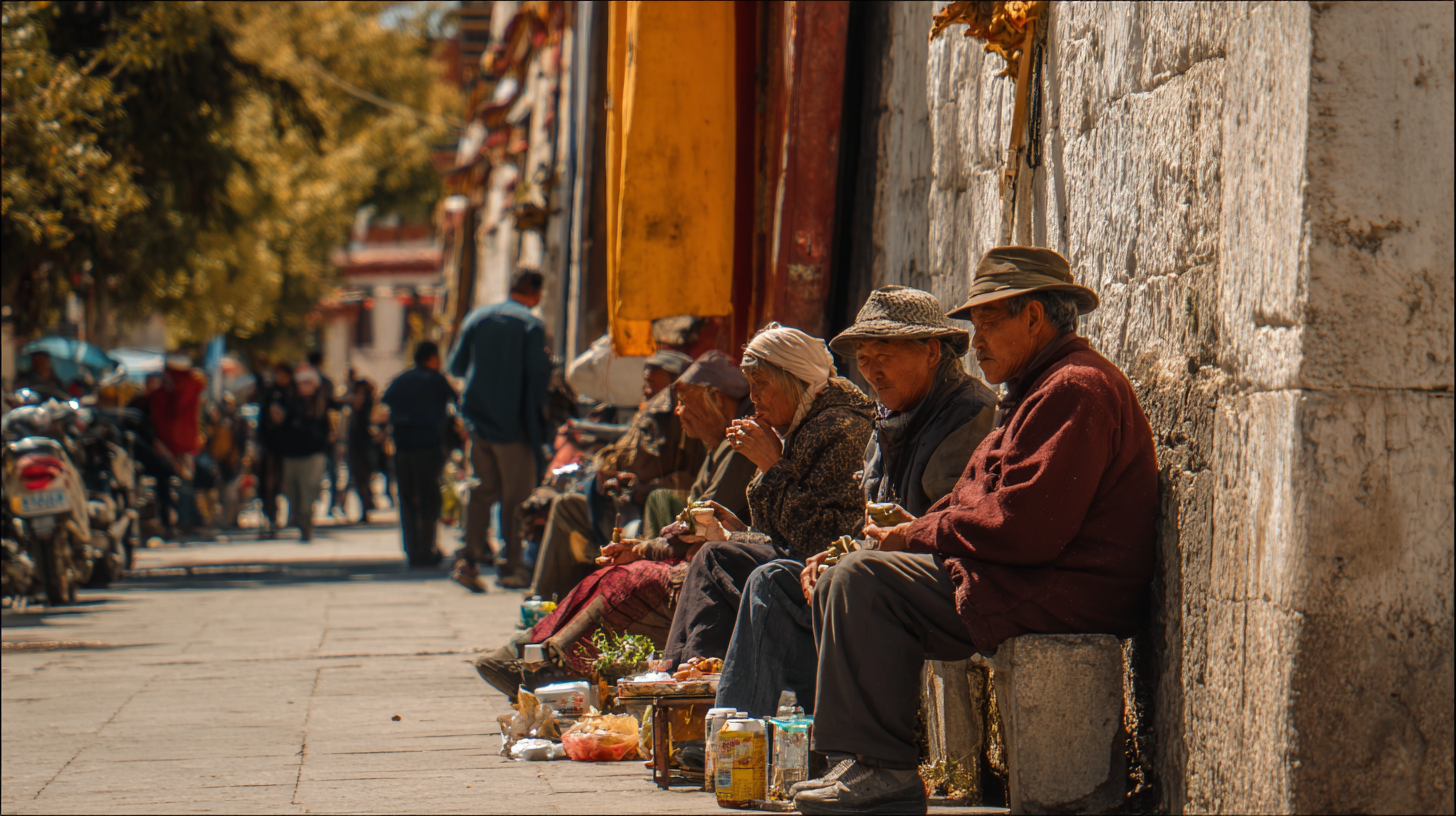
When you first set foot in Lhasa, the thin air catches you like a cold reminder that you are somewhere distinct; walk its scarlet alleys and the scent of butter tea drifts from crumbling walls, as though the very stones themselves were steeped in yak fat. In the monasteries perched above the city, each spoonful carries more than mere nutrition—it is a small ritual, an offering to body and spirit alike.
Morning Rituals: Butter Tea and Tsampa
Before dawn breaks, monks stir from slumber in their simple quarters, tucked beneath prayer flags fluttering against a cobalt sky. They begin the day not with coffee (fortunately for their kidneys) but with a generous bowl of yak butter tea. This isn’t your grandmother’s lukewarm brew; it’s made by hand, churning warm tea leaves with salted yak butter until it swirls into a milky paste. Drink a cup and you can feel your veins lubricate; skipped entirely, and you risk blue lips by the time you reach the prayer hall.
Paired with the butter tea is tsampa—a humble flour made from roasted barley. Monks pinch off a handful, roll it into a small ball, then dunk it into the greasy tea; the result is a dense, salty mouthful that vanishes nearly as soon as it appears. In a land where snowfall can fall in July, tsampa provides the reliable calories to sit through hours of chanting without shivering into oblivion. More practical than prose, it is the Tibetan equivalent of a portable energy bar—if your energy bar required buttered tea to make sense.
Midday Feast: Noodle Soups and Steamed Buns

By mid-morning, the monastery kitchen flares to life. Huge cauldrons bubble with Thenthuk, a hand-pulled noodle soup whose thick strips of dough float in a savory broth laced with chopped vegetables and morsels of yak or mutton—provided “clean meat,” meaning animals not slaughtered expressly for the monk, can be procured. Some monasteries remain strictly vegetarian, but most, faced with an unforgiving climate, concede that animal protein is often a necessity rather than a luxury.
When the bell tolls for lunch, monks assemble in long rows of low benches. A bowl of steaming Thenthuk arrives first; its broth is rich, almost buttery, even before you consider the spoonfuls of butter tea they might pour in later. On the side, a small stack of steamed buns—filled sometimes with spicy chunks of meat, sometimes with minced mushrooms and onion—awaits. A dab of sepens, the sharp Tibetan chili dip, cuts through the richness, serving as a reminder that even in sanctity, one can crave a fiery kick.
For those without a taste for soup, there is porridge made from the same barley meal that becomes tsampa; sometimes it is studded with bits of dried cheese or tossed with cubes of yak butter. Imagine oatmeal if oatmeal were made for people who could freeze solid while eating it.
Afternoon Fast: Practice Over Palate
Once the midday repast concludes, monastery rules generally forbid eating solid food until the next morning. The monks return to their debates, chanting, and meditation—activities fueled by the lingering warmth of tsampa and butter tea. If hunger gnaws before dusk, another cup of butter tea will suffice; the fat keeps the chill at bay. By the time candles flicker in the prayer hall, most have already made peace with an empty stomach.
Festival Shifts: When Ritual Dictates the Menu

In Tibet, festivals are more than a day off—they are an overhaul of every routine, including what and how the monks eat. During Saga Dawa (usually May or June), believed to commemorate Buddha’s birth, enlightenment, and parinirvana, monks observe a stricter form of vegetarianism. Meat, even that “clean meat,” is off the table; kitchens prepare special ginseng fruit rice, combining barley with dried fruits, nuts, and saffron to make a vibrant, golden pilaf. The dish does little to fill the stomach in the way yak fat does, but it fills the heart with merit—so at least they say.
On the Shoton Festival in July or August, yogurt takes center stage. Local herders arrive bearing bowls of thick, creamy Tibetan yogurt—its tang refreshing after hours of ritual. Across Lhasa, the great monasteries unfold their giant thangkas (Buddhist scroll paintings) for the faithful, and monks indulge in yogurt instead of their usual butter tea. Locals milling around will often invite travelers to taste fresh yogurt as they stand beneath the colossal images of Buddha, making for a surprisingly communal experience: one moment you’re admiring ancient iconography, the next you’re licking honey off your fingers.
When Losar (Tibetan New Year) arrives, a single meal supplants food for days: Guthuk, a “nine-ingredient soup.” Each dumpling in the soup hides a token—chili peppers spell mischief, wool suggests laziness, charcoal indicates a black-hearted rascal. Pull one from your spoon and you gamble on a humorous shade of prophecy for the coming year. For monks, it’s a welcome diversion from the otherwise monotonous diet; for travelers, it’s a chance to laugh at their misfortunes and feel briefly Tibetan.
Beyond the Table: How Travelers Can Taste Monastic Life

If you wish to glimpse the workings of a monastery kitchen, arrange permission through a licensed Tibetan tour operator (foreigners cannot obtain a Tibet Travel Permit without one). In Drepung Monastery, tours of the vast kitchen reveal row upon row of steaming vessels—one pot of tsampa flour, another of simmering meat broth. A guide will show you how monks measure barley by the scoop and churn butter tea with long, fat spoons, turning what might seem a humble meal into a meditation on self-sufficiency.
For a more informal taste, step into a Tibetan tea house in Lhasa’s Barkhor district: Guangming Kamqung Sweet Tea House is a local favorite. Sit at a wooden table under prayer flags and order a pot of sweet tea—or try the now-ubiquitous Tibetan soup noodles. Locals will often strike up conversation, offering advice on how to shape tsampa dough with just the right amount of butter. It is noisy, warm, and filled with laughter as travelers and residents alike break bread—or tsampa—together.
If you venture slightly beyond the city to nunnery tea rooms like those at Canggu Nunnery or Chimelong Nunnery, you may be invited into the kitchen itself. There, nuns quietly stir cauldrons, and if you show respect—quiet attire, soft footsteps—you might share a meal of plain rice, steamed vegetables, or another bowl of Thenthuk. Women’s monasteries move at a gentler pace, so you might finish your tea in the company of a dozen silent nuns, their heads bent in prayer, while your own thoughts simmer like the broth before you.
A final note on etiquette: when you dine in a monastic setting, dress modestly—no sleeveless shirts or loud colors—and avoid flash photography. Let the silence of the prayer wheels and the steam rising from your bowl be your guide.
Why It Matters: Nutrition, Belief, Culture
On first glance, the “Tibetan monks diet” may read as austere; minute by minute, it is born of necessity—of altitude, tradition, and devotion. But each bowl tells a story: of a people who learned to survive where most would freeze, who turned barley into culture, and who found humor in pulling a dumpling that predicts a “hair of good fortune” or “black-hearted scoundrel.” To taste a monk’s meal is not simply to fill your belly but to sip on centuries of reverence: for the land, for sentient beings, and for a life that seeks neutrality in a world always asking you to take sides.
So the next time you find yourself sipping a buttery brew in Lhasa’s thin air, remember that you are partaking in something far richer than calories. You are sampling an entire philosophy, served with a dash of chili and a wink of Tibetan humor.