Most English-language travel content about Lhasa feels oddly detached. The recommendations are familiar, the language polished but distant. Potala Palace, Jokhang Temple, Barkhor Street. It’s not that these places aren’t remarkable. It’s that they are always framed from the outside.
So we turned to Chinese-language sources instead. We combed through Tibetan travel blogs, local forums, and firsthand accounts from people who have actually lived or spent meaningful time there. From this, we gathered eight experiences that locals believe truly reflect the soul of Lhasa. These are not box-checking activities. They are slow moments, small immersions, quiet recognitions that something deeper is happening beneath the surface.
Here’s a concise English table version of your content:
| # | Experience | Key Highlight |
|---|---|---|
| 1 | Sit in the Sun at Jokhang Square | Watch locals and pilgrims in quiet devotion, feeling the calm rhythm of faith. |
| 2 | Visit Potala Palace at Night | Enjoy its silent, illuminated presence reflected on the nearby lake. |
| 3 | Wear Traditional Tibetan Dress | Walk old city alleys and feel a deeper connection to the place. |
| 4 | Witness Sera Monastery Debates | See monks engage in dynamic, philosophical debates. |
| 5 | Share a Meal in a Tibetan Home | Experience simple, authentic home-cooked dishes and family life. |
| 6 | Walk Barkhor Street Aimlessly | Join the prayer circuit and move with the local flow. |
| 7 | Spend Time in a Local Teahouse | Drink sweet tea, listen to conversations, and absorb daily life. |
| 8 | Pause in a Bookstore on Princess Wencheng Street | Explore used books and enjoy a pocket of stillness amid the bustle. |
1. Sit in the Sun at Jokhang Square and Watch Belief Take Shape
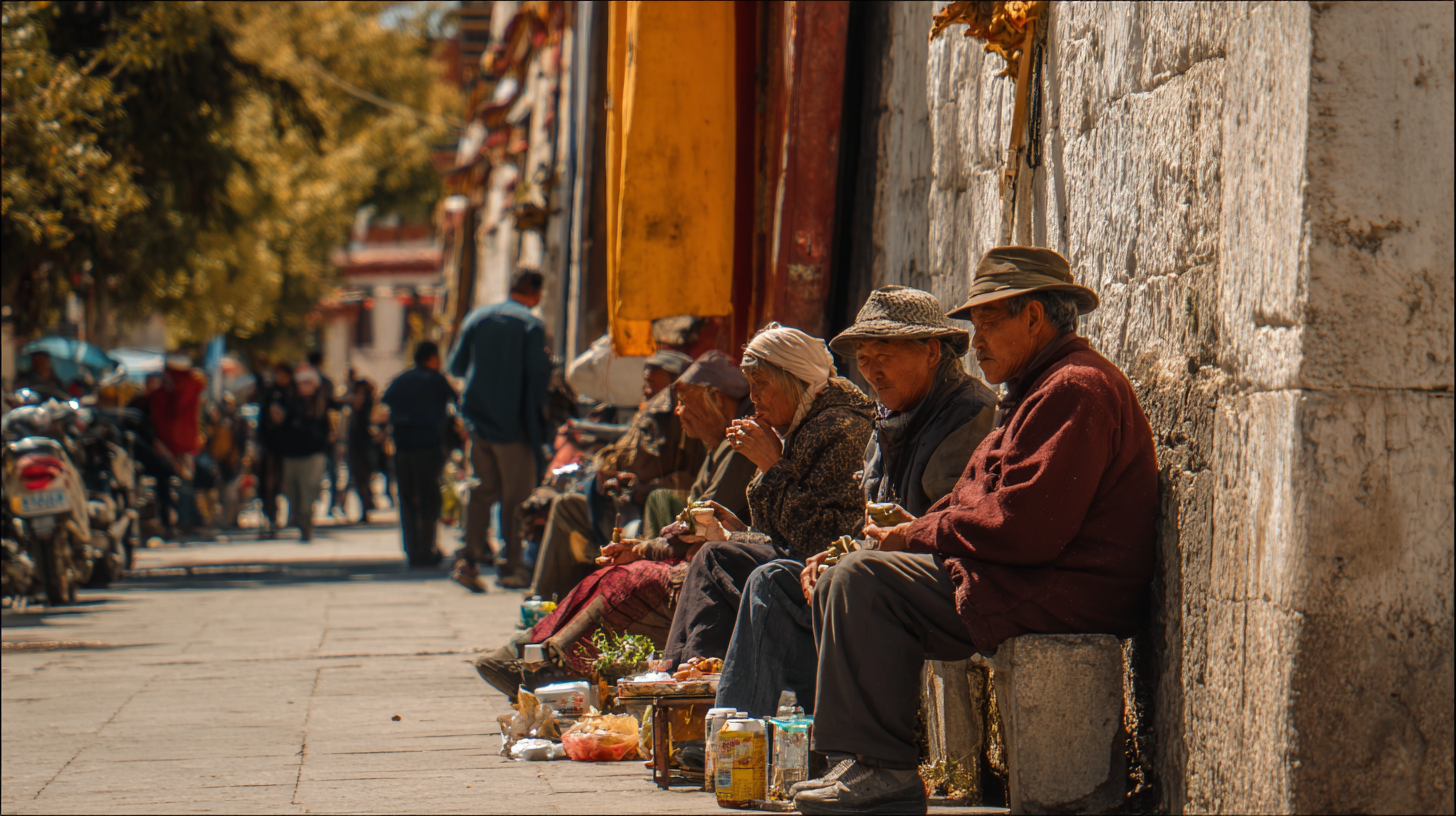
As the air cools in late autumn, Lhasa’s sunlight becomes gentler. Jokhang Square fills with elderly locals, leaning against the stone walls, sipping sweet tea from old thermoses, their fingers slowly moving along prayer beads. Around them, time seems to soften.
Pilgrims from distant provinces arrive on foot, often having prostrated the entire way. Their faces are windburned, their clothes thick with dust. But their movements are measured, and their eyes carry a quiet determination. They aren’t here for photos. They are here to fulfill a vow.
You can sit nearby without saying a word. After a while, the silence becomes something you listen to. You begin to understand that faith, in this part of the world, is not loud or performative. It is woven into the pace of daily life.
2. Visit the Potala Palace at Night When It Finally Falls Silent

By day, the Potala Palace commands your attention with sheer scale. It looms over the city, its red and white walls cutting sharply into the blue sky. But it is at night, when the lights are low and the city grows quiet, that the building seems to exhale.
The reflection on the nearby lake shimmers gently. The steps are empty. There are no lines, no voices, only stillness. It feels less like a monument and more like a person who has seen too much and speaks only when necessary.
You don’t need to go inside again. Just walk around it slowly. Let the presence of the palace be enough.
3. Wear Traditional Tibetan Dress and Wander the Alleys of the Old City
It may begin as a lighthearted photo opportunity. You try on the robe, the jewelry, the headpiece. But once you step outside in full dress, something shifts.
The narrow alleys feel different when you walk them in traditional clothing. Strangers glance at you with a flicker of recognition. The walls seem warmer. Even the red-painted windows seem to notice your presence.
This is not about dressing up. It’s about letting your body feel a different rhythm. You are not pretending to be someone else. You are briefly meeting a part of the place from the inside out.
4. Witness the Afternoon Debates at Sera Monastery
Sera Monastery becomes a stage each afternoon, but not for tourists. Monks in maroon robes form tight circles under the shade of old trees. One stands. Another sits. The standing monk claps loudly, leans forward, poses a question. The reply comes back calm but firm.
The debates are intense. They are physical. Each gesture carries years of tradition. This is how monks sharpen their understanding of Buddhist philosophy. Logic is essential. Memory, discipline, and wit are all on display.
You may not follow the content. Still, the energy is unmistakable. You are watching a living form of learning, equal parts ritual and reasoning.

Lhasa’s restaurants offer a curated version of Tibetan cuisine. But to understand how people really eat, you need to step into a home. That usually means traveling to the edge of the city or even into a nearby village. With the help of a guide, you might find yourself sitting cross-legged by a stove, sipping tea from a handmade bowl.
The food is simple. Buckwheat noodles. Dried yak meat. Fresh butter tea. Around you, family members move comfortably. A child may run past. Someone might be carving tsampa into small shapes. No one performs for you. You are simply present in a scene that continues whether you are there or not.
This kind of experience is not about culinary adventure. It is about humility. It is about understanding what nourishment means when it is part of faith, family, and geography.
6. Walk Barkhor Street with No Destination in Mind
Barkhor is often described as a market, but that description misses the point. Yes, there are stalls and shops. But at its core, Barkhor is a prayer path. It wraps around Jokhang Temple in a circle of movement, rhythm, and breath.
Locals walk it clockwise, spinning prayer wheels, sometimes muttering mantras. Many do it daily, quietly and without ceremony. Amid the scent of incense and the clatter of foot traffic, there is an unmistakable sense of order.
You don’t need to buy anything. In fact, you should try walking the kora without speaking. Just move with the crowd. Listen with your body. The city will speak for itself.
7. Spend Time in a Local Teahouse and Listen
Tibetan teahouses are the opposite of cafes designed for productivity. They are places of presence. You order sweet tea and find a seat, likely next to people you don’t know. The tea is creamy, slightly salty, and endlessly refillable.
Around you, conversations unfold. Some are loud and filled with laughter. Others are slow and contemplative. A woman tells a story about her pilgrimage. An older man debates the latest monastery reform.
No one will ask you to leave. No one will pressure you to talk. But if you stay long enough, someone may turn and ask where you’re from. And you’ll find that the conversation never feels forced. It simply begins.
8. Pause in a Bookstore Tucked Away on Princess Wencheng Street
In the midst of a street designed for tourists, there is a bookstore that seems to resist the flow. Its shelves are uneven. The signs are handwritten. The chairs are mismatched and soft from use.
This is not a place that sells bestsellers. It offers used books, faded maps, and notes left behind by travelers who have come and gone. You might find a Tibetan-language edition of a novel you love, or a postcard addressed to someone who never picked it up.
You sit near the window. Outside, the noise continues. But inside, the air holds steady. In this space, you remember how quiet can be a form of connection too.
Lhasa does not reveal itself quickly. It offers glimpses. It waits to see if you are paying attention. These eight experiences are not dramatic or extravagant. They are slow, often quiet, sometimes invisible to those rushing through.
But if you give them your time, they will give you something lasting. Not a souvenir, but a shift in how you see.