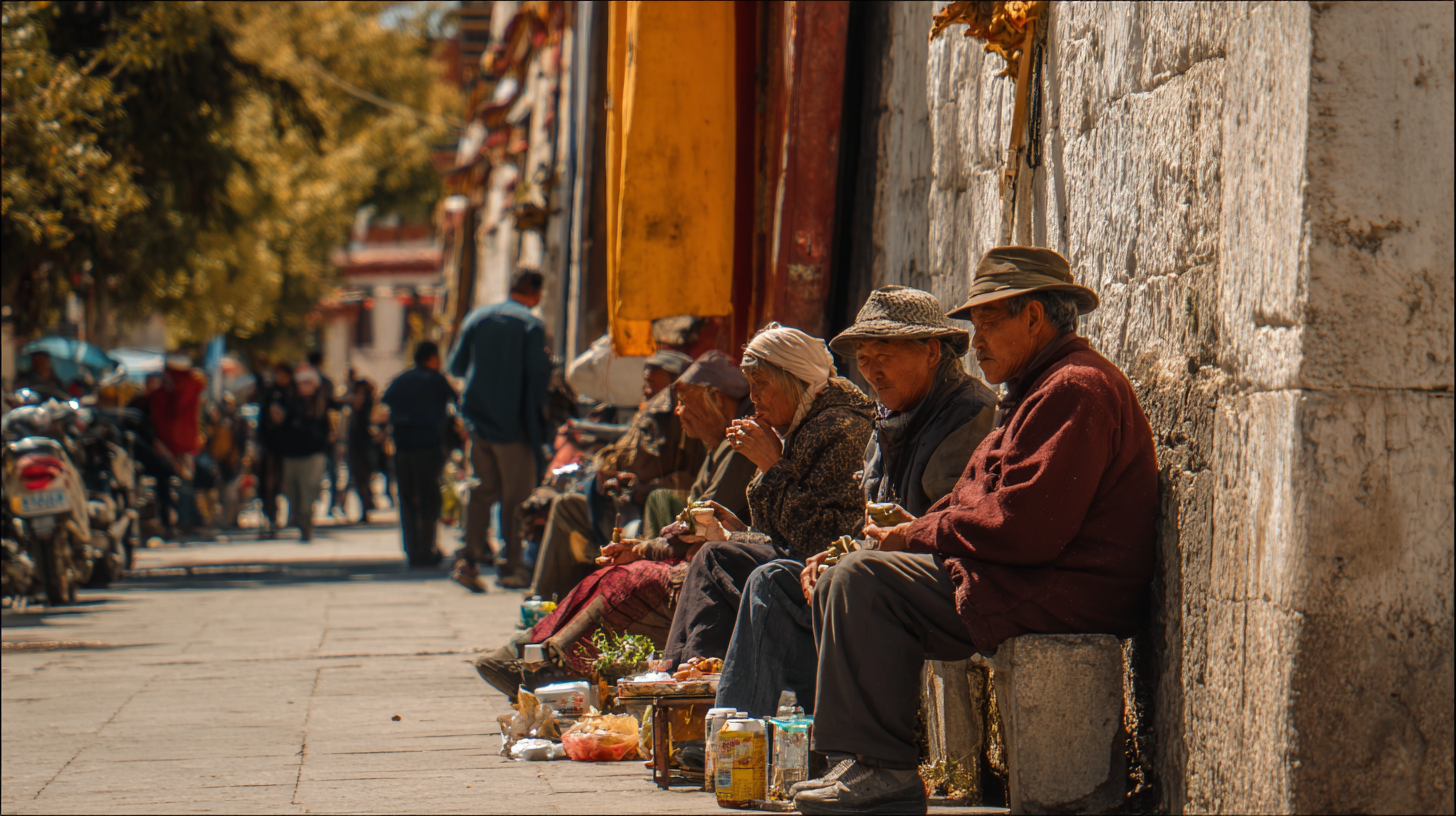
Geography of the Tibetan Plateau
| Geographic Feature | Description |
|---|---|
| Mountains | Includes Mount Everest, the tallest mountain on Earth, and numerous peaks over 8,000 meters. |
| Rivers | Sources of the Yangtze, Yellow, Indus, Mekong, Ganges, Salween, and Yarlung Tsangpo (Brahmaputra). |
| Tibetan Plateau | Spans 1.2 million square kilometers, with an average elevation of 4,000 meters, often called the “Water Tower.” It encompasses the Tibet Autonomous Region (TAR) within China Tibet and extends into parts of Sichuan province, including the Aba and Ganzi Tibetan-Qiang Autonomous Prefectures. |
Mountains and Rivers
Tibet, often called the “Roof of the World,” is home to some of the planet’s tallest and most majestic peaks, including Mount Everest, the highest mountain on Earth. Southern Tibet contains abundant valleys, which offer limited agricultural land, dense forests, and significant features like snow-capped peaks and its proximity to the great Himalayan Region. The Tibetan Plateau, spanning approximately 1.2 million square kilometers with an average elevation of 4,000 meters, is the highest region on the planet. This remarkable landmass is not only significant for its elevation but also for being the source of several major rivers. The Yangtze, Yellow River, Indus, Mekong, Ganges, Salween, and Yarlung Tsangpo (Brahmaputra) all originate here, earning Tibet its nickname as the “Water Tower of Asia.”
China has recognized the strategic importance of this water-rich plateau, investing heavily in water resource projects to harness its potential for both energy and agriculture.
Climate and Wildlife

Tibet’s climate is shaped by its altitude and topography. For nine months of the year, the region experiences severe dryness, with an annual average snowfall of just 46 centimeters, largely due to the rain shadow effect. Despite this, western passes remain traversable throughout the year, even though temperatures in these areas are persistently low. Vegetation in these parts is sparse, with little growing taller than small shrubs.
Tibet’s forests and grasslands, however, support a diverse range of wildlife. Among the notable species are black bears, red pandas, musk deer, barking deer, and squirrels. These animals inhabit the region’s rugged yet enchanting natural habitats, making Tibet a haven for biodiversity.
| Aspect | Details |
| Climate | Severely dry for nine months annually, with only 46 cm of annual snowfall due to the rain shadow effect. |
| Wildlife | Includes species like black bears, red pandas, musk deer, barking deer, and squirrels. |
| Vegetation | Sparse in western regions; primarily low shrubs and grasslands. |
Regions of Tibet
| Region | Population | Key Features |
| Tibet Autonomous Region | 6.4 million | Borders Xinjiang, Qinghai, Sichuan, Yunnan, and neighboring countries; central hub of Tibetan culture. |
| Eastern Tibet | 2.7 million | Known for stunning natural beauty, with mountains, rivers, and lakes; includes Tibetan Autonomous Prefectures. |
| Western Tibet | 1.5 million | Rugged terrain with high-altitude deserts and valleys; home to Ngari Prefecture. |
Tibet Autonomous Region (TAR)
China’s Tibet Autonomous Region (TAR) is Tibet’s largest administrative unit, encompassing an area of 1.22 million square kilometers. It shares borders with several Chinese provinces, including Xinjiang, Qinghai, Sichuan, and Yunnan, while also bordering Nepal, India, Sikkim, and Burma to the south. The TAR is home to approximately 6.4 million Tibetans, though many more reside in other regions of China.
Eastern Tibet
Eastern Tibet, with a population of around 2.7 million, is celebrated for its breathtaking landscapes. This region includes several Tibetan Autonomous Prefectures, which serve as administrative divisions within China. Eastern Tibet boasts striking natural features such as towering mountains, winding rivers, and tranquil lakes, making it one of the most picturesque areas of the plateau.
Western Tibet
In contrast, Western Tibet, with a population of about 1.5 million, is defined by its rugged and remote terrain. The Ngari Prefecture, a key administrative division in this region, encompasses high-altitude deserts, deep valleys, and towering peaks. Western Tibet is less accessible than its eastern counterpart but remains a destination for those seeking untouched natural beauty and adventure.
Tibetan Culture and History

Early History and Empire
Tibet’s history as a unified entity began under the rule of Songtsen Gampo (604–650 CE), who united parts of the Yarlung River Valley and founded the Tibetan Empire. During the following centuries, Buddhism was established as the state religion, and Tibetan influence extended across large swathes of Central Asia. This period marked the zenith of Tibetan power, characterized by cultural, political, and religious achievements that still resonate today.
Language and Literature
The Tibetan language, a member of the Tibeto-Burman family, features a variety of regional dialects, many of which are not mutually intelligible. Despite these linguistic differences, the language serves as a vital cultural link for Tibetans both within and beyond the plateau. Around 150,000 Tibetan speakers in exile, primarily in India and Nepal, continue to preserve their linguistic heritage.
Tibetan Art and Architecture
Tibetan art and architecture are deeply rooted in Tibetan Buddhism and reflect the region’s unique cultural heritage. The art forms are characterized by intricate designs, vibrant colors, and symbolic motifs that tell stories of spiritual significance. One of the most iconic elements of Tibetan art is the thangka, a traditional painting that depicts Buddhist deities, themes, and stories. These exquisite works of art are not only visually stunning but also serve important roles in rituals and ceremonies.
Tibetan architecture is a fascinating blend of Chinese and Indian influences, with a strong focus on Buddhist monasteries and temples. The Potala Palace, a UNESCO World Heritage Site, stands as a prime example of this architectural style. Its imposing structure, intricate designs, and spiritual significance make it a symbol of Tibetan culture. Other notable examples include the Jokhang Temple and the Tashilhunpo Monastery, both renowned for their stunning architecture and beautiful murals.
Beyond religious structures, Tibetan art and architecture can also be seen in traditional homes, which are often decorated with intricate designs and colorful motifs. These homes reflect the same attention to detail and cultural richness found in the region’s more prominent buildings, showcasing the deep connection between Tibetan people and their artistic heritage.
Tibetan Festivals and Traditions
Tibetan festivals and traditions are an integral part of the region’s cultural fabric, deeply rooted in Tibetan Buddhism. These celebrations offer a glimpse into the vibrant and spiritual life of the Tibetan people. One of the most important festivals is Losar, the Tibetan New Year. This joyous occasion is marked by traditional foods, music, and dance, bringing families and communities together in celebration.
Another significant festival is the Monlam Prayer Festival, a time for Tibetans to gather and pray for peace, prosperity, and the well-being of all sentient beings. This festival highlights the communal and spiritual aspects of Tibetan culture, emphasizing the importance of prayer and meditation.
Traditional Tibetan dress is characterized by vibrant colors and intricate designs, often worn during festivals and special occasions. These garments are a testament to the region’s rich cultural heritage and are a source of pride for the Tibetan people. Music and dance also play a crucial role in Tibetan culture, with traditional performances often taking place during festivals. These art forms are a way for Tibetans to express their cultural identity and keep their traditions alive.
Economy and Demographics

Economy and Development
Tibet’s economy revolves around subsistence agriculture, with livestock rearing as the dominant occupation. Crops such as barley, wheat, buckwheat, and potatoes form the backbone of agricultural activities, while fruits and vegetables are cultivated in smaller quantities. In recent years, tourism has emerged as a significant sector, actively promoted by authorities as a means to boost economic development.
Population and Demographics
Tibet’s population is predominantly ethnic Tibetan, though the exact proportions are a matter of debate. While some sources assert that Tibetans make up 90% of the population, the Tibetan Government in Exile claims that non-Tibetans now outnumber Tibetans in certain areas. This demographic shift is a sensitive issue in discussions about Tibet’s cultural and political future.
Tibet’s Relationship with China
China’s Tibet Autonomous Region has been governed as an autonomous region of China since 1965, though its relationship with Beijing remains a topic of international debate. Under Chinese rule, Tibet has experienced significant changes in its governance and cultural landscape. The Chinese government asserts historical sovereignty over Tibet, a claim contested by exiled Tibetan communities. The Tibetan Government in Exile, led by the Dalai Lama, continues to advocate for greater autonomy or independence, though this position is not recognized by Beijing.
Natural Resources and Environmental Issues
The Tibetan Plateau is a treasure trove of natural resources, including minerals, water, and biodiversity. However, this region also faces significant environmental challenges. The plateau is home to several major rivers, such as the Yangtze, Yellow, and Mekong, which are vital sources of water for millions of people across Asia. These rivers underscore the importance of the Tibetan Plateau as a crucial water source.
The region is also rich in minerals like copper, gold, and lithium. While the extraction of these resources contributes to economic development, it also poses environmental risks, including pollution and deforestation. The impact of mining activities on the fragile ecosystem of the plateau is a growing concern.
Climate change is another significant threat to the Tibetan Plateau. Rising temperatures and changing precipitation patterns are affecting the region’s delicate balance, leading to glacial melt and altered water flows. Deforestation exacerbates these issues, leading to loss of biodiversity and increased risk of landslides and floods. Addressing these environmental challenges is crucial for the sustainability of the region and the well-being of its inhabitants.
Travel and Tourism

Getting to Tibet
| Transportation | Details |
| Air Travel | Lhasa hosts five airports, connecting Tibet to major cities in China. |
| Railway | The Qinghai-Tibet Railway links Lhasa to the rest of China, offering a scenic journey across the plateau. |
| Roads | The Friendship Highway connects Tibet with Nepal, passing through notable towns such as Shigatse and Tingri. |
Reaching Tibet is an adventure in itself, with three primary modes of transportation: air, rail, and road. Lhasa, the capital, serves as the region’s transportation hub, with five airports and a well-connected railway station. The Friendship Highway, linking Tibet to Nepal, offers a scenic yet challenging route, passing through key towns such as Shigatse and Tingri.
Transportation
Transportation in Tibet is a complex endeavor due to the region’s rugged terrain and high altitude. However, significant investments by the Chinese government have led to improvements in infrastructure. The Qinghai-Tibet Railway is a major transportation artery, connecting Lhasa to Xining in Qinghai Province. This railway has revolutionized travel in the region, providing a scenic and efficient link between Tibet and the rest of China.
Highways also play a crucial role in connecting Tibet to neighboring countries. The Friendship Highway, for instance, links Tibet with Nepal, while the Arniko Highway connects the region to northern India. These routes are vital for trade and travel, despite the challenges posed by the mountainous terrain.
Air travel is another option for reaching Tibet, with several airports, including Lhasa Gonggar Airport and Shigatse Peace Airport, facilitating access to the region. However, traveling in Tibet can still be challenging due to the high altitude and rugged landscape. Despite these difficulties, the ongoing development of transportation infrastructure continues to improve connectivity and accessibility in China’s Tibet Autonomous Region.
Trekking and Tourism
| Trek | Difficulty | Highlights |
| Mt. Kailash Trek | Challenging | Sacred pilgrimage circuit around Mt. Kailash. |
| Ganden to Samye Trek | Moderate | Combines cultural sites with scenic landscapes. |
| Old Tingri to EBC | Challenging | Spectacular views of Everest and surrounding peaks. |
| Tsurphu to Yangpachen | Moderate | Features hot springs and monasteries. |
Tibet is a paradise for trekking enthusiasts, offering some of the most awe-inspiring trails in the world. Popular routes include the Mt. Kailash trek, the Ganden to Samye trek, and the old Tingri to Everest Base Camp (EBC) trek. For those seeking less strenuous options, routes like Ganden to Samye or Tsurphu to Yangpachen provide equally rewarding experiences. Adventurous trekkers, however, may prefer the challenges of Mt. Kailash or the Tingri to EBC trek, which test both endurance and determination.